
Fig. 1Body
The body, read in sections.
A plastic surgeon sees the body in layers and in cross-section. Three decades of reconstructive and aesthetic surgery start from that map; the regenerative work starts at the donor site.
Prof. Dr. H. Eray Copcu, MDPlastic, reconstructive & aesthetic surgery
Regenerative surgery with what the patient already has. The stromal cells in their own fat and the signals in their own blood, freed by blades and screens instead of enzymes, in one operative session.
Fig. 1Body
A plastic surgeon sees the body in layers and in cross-section. Three decades of reconstructive and aesthetic surgery start from that map; the regenerative work starts at the donor site.
Fig. 2Layers
Epidermis, dermis, the fat close to the surface and the fat that lies deep. Each needs a different graft, and some carry the cells that repair it.
Fig. 3MEST
Mechanical Stromal-cell Transfer frees the regenerative cells in a patient's own fat with ultra-sharp blades and calibrated screens. No enzymes, no culture, one session.
Fig. 4TOST
What passes the screen is neither SVF nor nanofat but every stromal cell with its matrix. Copcu named it TOST, so results could be compared between studies.
Fig. 5Plasma
His PvRP kit, patented in 2023, concentrates platelets beyond standard PRP. Mechano-Native Plasma, now in development, aims to keep plasma liquid without anticoagulant by controlling where fibrin forms.
Fig. 6ARAT
Adjustable Regenerative Adipose-tissue Transfer cuts the same fat for the place it will fill: 400 µm or finer around the eyes, thicker grafts for deeper planes, up to 4000 µm for the breast.
Fig. 7Record
Professor of plastic surgery since 2011, founder of two university departments and of the first regenerative medicine department in a Turkish university.
Position
Copcu qualified at Ege University in Izmir and trained in plastic surgery at Izmir Atatürk Teaching and Research Hospital, with electives in Edinburgh and Leeds and burn fellowships in Pittsburgh and Cincinnati. He founded and led the departments of plastic, reconstructive and aesthetic surgery at two Turkish medical faculties, and served one of them as vice-dean.
He was the first academic in Türkiye to establish a regenerative medicine department inside a university. Since his professorship in 2011 his work has moved almost entirely to stromal cells and regenerative technology: defining, patenting and publishing the mechanical techniques on this page, and teaching them through G-CAT Academy and congress workshops.
Techniques
Techniques, terms and instruments Copcu introduced to the literature, with the year each entered it and, where one exists, the paper that defines it.
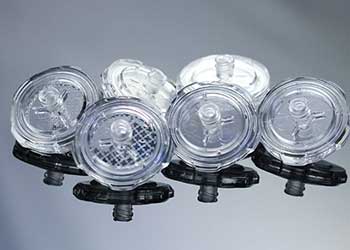
Mechanical Stromal-cell Transfer
Stromal cells freed from adipose tissue by calibrated blades and screens alone: no enzymes, no culture, no incubation. The tissue is processed and returned in a single operative session.
Read the paper : New Mechanical Fat Separation Technique: ARAT and MEST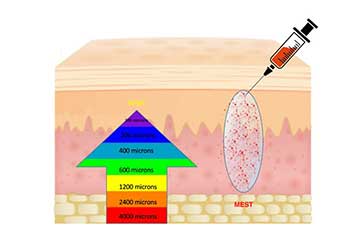
Adjustable Regenerative Adipose-tissue Transfer
Fat grafting cut to the indication rather than to habit. Graft particle size is chosen across a 400 to 4000 micron range, so the same lipoaspirate can be tuned for the eyelid or for the breast.
Read the paper : A New Classification for Adipose-derived Stromal-cell Systems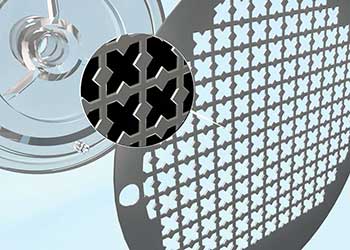
Total Stromal-Cells
A correction to the field's vocabulary. What mechanical processing yields is neither stromal vascular fraction nor nanofat, and naming the actual product let results be compared between studies.
Read the paper : Not SVF or Nanofat, but Total Stromal-Cells (TOST): A New Definition
Supercharged Mechanical Stromal-cell Transfer
The stromal-cell yield of a single harvest raised by re-processing the fraction usually discarded, so a patient with little donor tissue is no longer excluded from treatment.
Read the paper : Supercharged Mechanical Stromal-cell Transfer (MEST)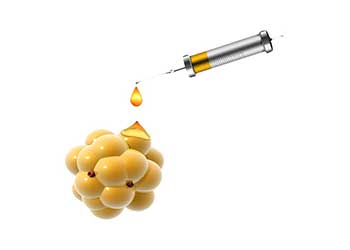
Conical Plicated Central U-shaped mammaplasty
A breast reduction built on a central pedicle and plicated into a cone. Written up as a modification of the Moufarrege total posterior pedicle technique and carried since under his own name.
Read the paper : A versatile breast reduction technique: COPCU's mammaplasty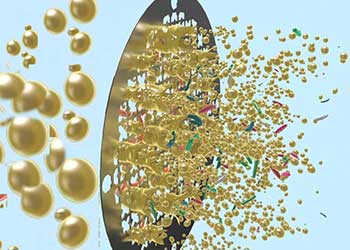
Platelet very Rich Plasma
A patented preparation kit, presented at IMCAS 2023 in Paris, that concentrates platelets beyond the yield of conventional PRP protocols.
Presented at IMCAS 2023, Paris
Research
Newer lines of work, from hypotheses still to be tested to protocols in clinical study. They are not at the same stage, so each one says where it stands.
Platform
ACTIVATE IT!
Brings Mechano-Native Plasma, Exoplasma and activated fat grafting under one roof: the regenerative potential already in a patient's own blood and tissue, brought out by mechanical means.
MNP · “Plasma 3.0”
A liquid, usable regenerative plasma from the patient's own blood, prepared without anticoagulant. Rather than stopping clotting chemically, the method controls where fibrin forms, then works the plasma mechanically. Platelets, extracellular vesicles and growth factors are measured against PRP and PRF; a paper, “Plasma 3.0”, is in preparation.
formerly ExoDisc
The device that goes with MNP: a disc that holds fibrin inside a defined structure so that the plasma around it stays liquid. Disc geometry, materials, a “Dock & Drop” transfer system, packaging and instructions for use are being developed, with patent work alongside.
Micro-, Nano- and Exo-Plasma
Blood and plasma worked mechanically with the Adinizer into fractions that differ in the extracellular vesicles they carry. The question is the regenerative signal a product holds, not its platelet count alone.
Controlled Interfacial Priming of MNP
Whether changing, in a controlled way, the contact between air and blood or plasma changes its biological activation. Comparison groups and the parameters to measure have been set out; it is a hypothesis still to be tested.
dWAT · STANT / ANT
Fat used not only for volume but to support the dermis and dermal white adipose tissue: fat processed to about 100 µm, with its stromal fraction, placed in the dermis through a 32G needle. Feasibility and biological effect are still to be shown.
filler and vesicle carrier
A material made from the patient's own fat in which adipocytes are reduced and the extracellular matrix and stromal structures are kept: a filler, and a local carrier for vesicles. Joining non-autologous vesicles to the patient's own matrix is discussed as “autologization”.
quality from the source cell
Exosome and vesicle products whose quality starts with the cell that makes them: source cells are selected for glutathione level and homogeneity. Production medium, lyophilization and a “regenerative powder” format are being worked out.
conditioned medium · whole secretome
The whole secretome rather than isolated exosomes: the proteins and other factors cells release into their medium, characterized by proteomics, extracellular-matrix proteins included. Systemic regeneration is a field of study here, not an established indication.
recombinant human fibronectin
Human fibronectin produced by recombinant DNA technology in microbial systems: a molecularly defined, reproducible and scalable route, developed as a separate platform that complements the cell-derived products.
Autologized Induced Conditioning of Oriented Exosomes
The patient's own vesicles combined with vesicles from other cell sources in one protocol, studied in hair regeneration and in ischemic tissue. The name describes the approach; it does not claim that every biological effect is proven.
Hair regeneration
Stromal and adipose niche transfer, hair-specific peptides and combined protocols for the follicle.
Burn scars
Plasma, fat, stromal cells and vesicles together, for the quality of scarred tissue, not only its look.
Acne scars
One plan for every scar component: subcision, small-particle fat, TOST and dermal treatment.
Breast surgery
COPCU's mammaplasty, and fat grafting prepared with ultra-sharp blade systems.
Tissue at risk
Regenerative salvage of the nipple–areola complex when perfusion fails after reduction.
Face
ARAT grafts sized to each facial layer, from volume to the dermis.
Joints
Stromal-cell applications in joint disorders, presented to orthopaedic research societies.
Marjolin's ulcer
Malignancy in burn scars: a long-standing academic subject, with five publications.
Papers
Six of more than sixty peer-reviewed articles. Each opens at the publisher.
OSAPS Penang, MalaysiaICOPLAST Dubai, UAEIMCAS Paris, France
FATS Bangkok, ThailandKSPRS Seoul, KoreaIFATS Miami, USAGGRC Tbilisi, GeorgiaEuroasian Congress Istanbul, TürkiyeCell Surgical Network Conference Las Vegas, USAIMCAS Paris, France
KSPRS Seoul, KoreaIFATS Miami, USAVegas Cosmetic Surgery & Aesthetic Dermatology Las Vegas, USACell Surgical Network Conference Las Vegas, USA
European Orthopaedic Research Society, annual meeting, special symposium Izmir, TürkiyeThe Aesthetic Meeting Las Vegas, USAIMCAS Paris, France
IFATS Marseille, FranceISAPS Brisbane, AustraliaWorkshop Sydney, AustraliaInternational Aesthetic Surgery Symposium Istanbul, TürkiyeFATS Bangkok, Thailand
In the field
Photographs from the congresses, courses and live surgery in the record.
Contact
The practice is in Bornova, Izmir. Write or call; the address, phone and directions are on the contact page.